

The BJP Was Handicapped In Bihar. Shah Fixed It Block By Block.
While others played macro politics, Amit Shah's granular approach turned BJP's structural disadvantages into 180+ seats.

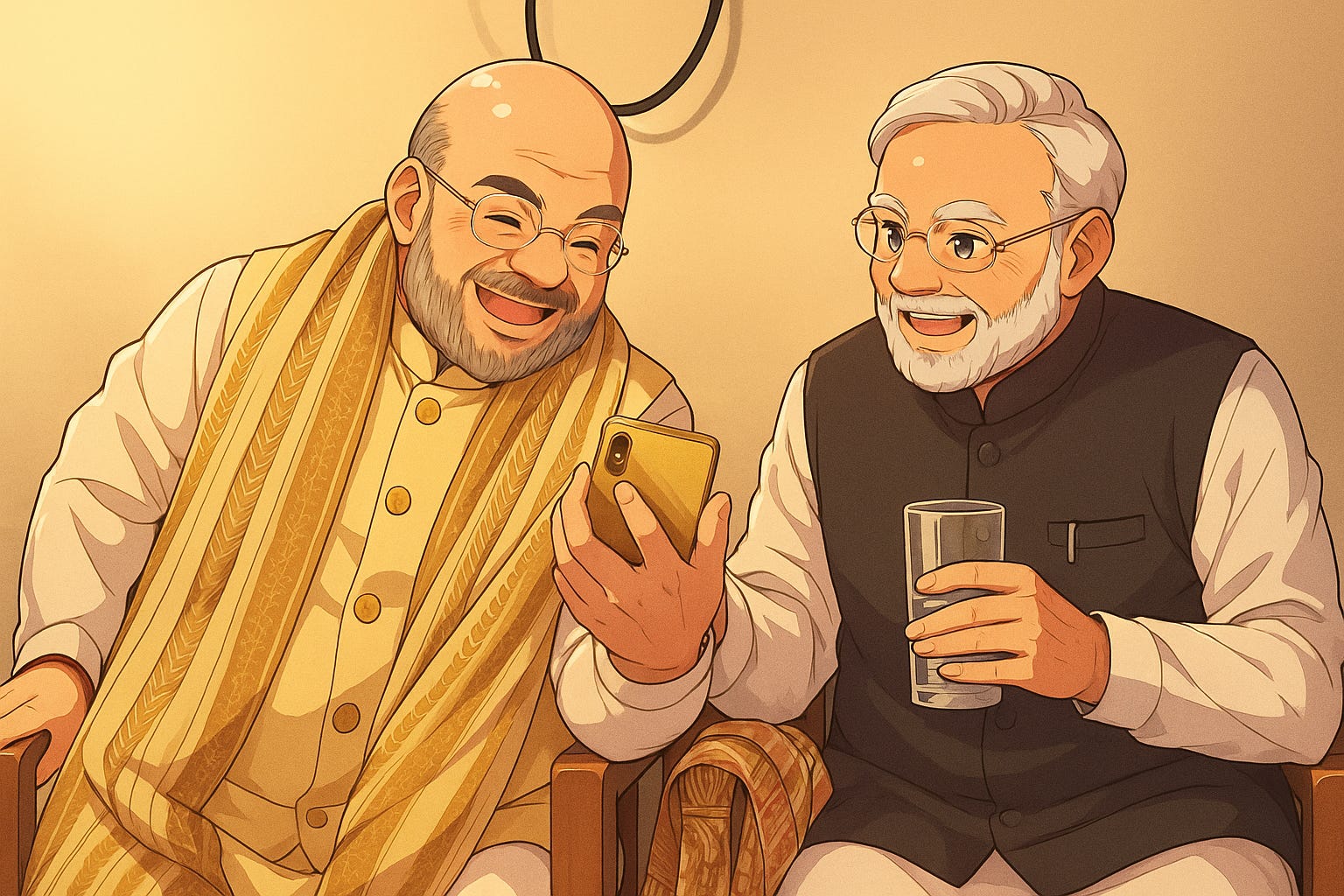
The BJP grappled with a series of internal challenges. Amit Shah fixed them block by block.
While analysts debated Nitish’s health and Tejashwi’s momentum, the BJP faced pressure from Prashant Kishor’s continuous attacks on senior leaders including state president Dilip Jaiswal and Deputy Chief Minister Samrat Chaudhary. Ticket distribution created additional complications. Upper-caste voters displayed noticeable shifts towards both Tejashwi Yadav and Prashant Kishor. Smaller potential vote-cutters were dissatisfied with the distribution process and threatened rebellion.
Shah’s response wasn’t dramatic. It was granular.
..
First fix: the upper-caste problem. Shah intervened to ensure that roughly half of the BJP’s tickets were allotted to upper-caste candidates. Not random distribution—strategic placement to address the specific alienation Kishor was exploiting. The intervention came after tracking where the discontent was most severe and where upper-caste votes could swing outcomes.
But ticket changes alone weren’t enough. Shah personally engaged with block-level figures to pacify them and preserve the BJP’s vote base. The level of detail mattered: he wasn’t managing state-level optics. He was preventing localized rebellions that could split votes in tight constituencies.
..
The Kushwaha challenge required different handling. Chaudhary was the face of the community, but Tarapur wasn’t his preferred seat. Standard politics says accommodate your star candidate. Shah’s approach: make the ground situation manageable enough that Chaudhary couldn’t refuse.
In Tarapur specifically, Shah managed to convince four potential candidates not to contest against Samrat Chaudhary. Four separate individuals, each with their own grievances, each capable of cutting enough votes to matter. Shah engaged them individually. The work wasn’t visible, but the math was clear: even 2-3% vote split across key constituencies could have killed the NDA’s momentum.
The payoff came later. Chaudhary subsequently played a crucial role in consolidating Kushwaha support for the NDA in the Magadh-Shahabad region, where the alliance was poised to regain significant ground after nearly a decade.
..
Coalition management exposed more friction. Chirag Paswan’s seat demands created complications that Jitan Ram Manjhi opposed. Multiple rounds of negotiations followed, with Nityanand Rai attempting to mediate, though unsuccessfully. The deadlock could have fractured the alliance arithmetic.
Shah’s compromise: Paswan secured 29 seats, 10 of which were reportedly provided by the BJP. The BJP absorbed the cost from its own quota to keep the coalition intact. Not ideal for BJP’s seat count, but necessary for maintaining alliance cohesion.
..
Then came the Gen Z problem. Early attempts to inform young voters about the Jungle Raj era fell flat until the local pop industry unexpectedly stepped in, producing songs and videos depicting the resurgence of criminal elements if Tejashwi Yadav were to come to power.
The BJP amplified these songs across platforms, creating momentum where official messaging had failed. Later in the campaign, Prime Minister Modi reinforced the message by recounting specific incidents from that period. The combination worked: peer-created content resonating where political speeches hadn’t.
..
This is how elections get won in the details. Shah didn’t overcome the BJP’s handicaps with brilliant strategy announcements. He overcame them by addressing four potential rebels in Tarapur, recalibrating ticket distribution based on caste arithmetic, negotiating coalition seat splits that kept everyone in the tent, and amplifying youth-created content that official campaigns couldn’t produce.
While everyone analyzed the macro story—Nitish’s schemes, women voters, the M-Y formula—Shah was preventing the micro-collapses that lose elections. That’s the victory nobody saw coming. Because nobody was watching the block-level warfare that made the landslide possible.
Read the full analysis on Swarajya: How Nitish Kumar Turned A Lost Election Into A Landslide