

India's Thousand Talents Program Is Here - 15 Years After China Proved It Works
Delhi launches set-up grants while Trump hands India the perfect opening

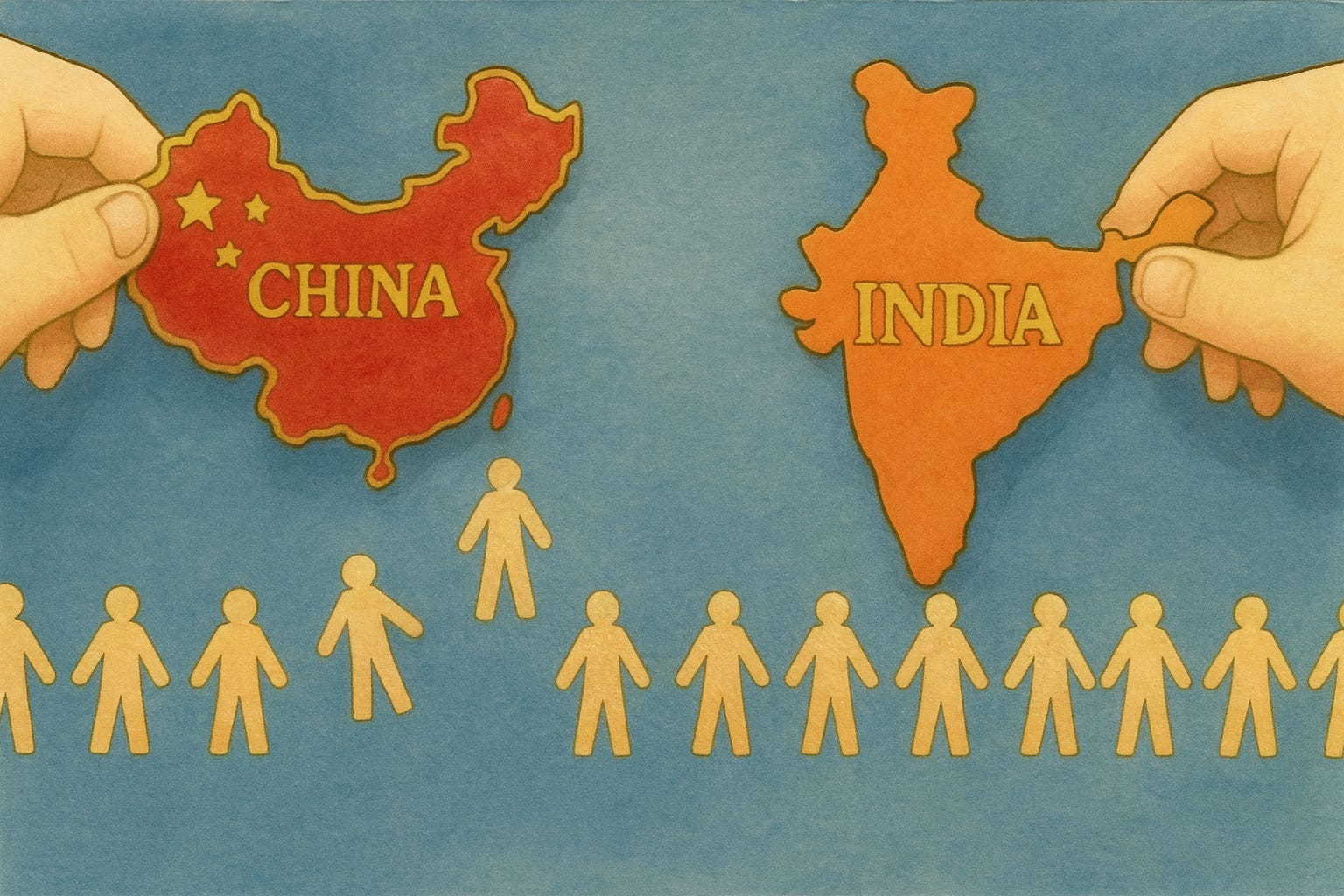
India just announced its version of China’s Thousand Talents program. Question is whether Delhi’s checkbook matches Beijing’s ambition.
The government is launching a scheme with “set-up grants” targeting 12-14 priority STEM areas to bring diaspora scientists home permanently. Officials explicitly cite Trump’s DEI crackdown and H-1B uncertainty as creating an opening.
This is India finally reading China’s 2008 playbook.
..
Here’s what China did. In 2008, Beijing launched the Thousand Talents Plan: 1 million yuan signing bonuses plus 3-5 million yuan research grants to lure scientists back.
By 2020, they’d recruited 7,000 scientists. China overtook the US in international patents by 2019.
The formula worked. China’s Young Thousand Talents scientists showed 27% higher publication rates than peers who stayed abroad. They published 144% more last-author papers - meaning they became independent researchers, not lab workers.
The boost came from bigger teams and better funding. Proven formula: throw enough money at diaspora talent, give them research empires, watch them outperform.
..
But India’s timing is smarter than it looks.
China launched during the 2008 financial crisis when Western academia was bleeding. India’s launching as Trump dismantles DEI, weaponizes H-1B visas, and makes US universities hostile for foreign academics.
Different crisis, same opportunity.
Plus India has an advantage China never did: no espionage baggage. China’s program worked but faced FBI investigations, 54 scientists fired, 20+ charged with espionage. US intelligence called it a scheme for “legal and illicit IP transfer.”
India can achieve similar results without similar sanctions.
..
Here’s the smart part. India’s focusing on 12-14 specific STEM areas - likely semiconductors, defense, AI, biotech. Not broad “come home” appeals.
China also targeted strategic sectors. That’s how they went from R&D dependency to dominance in critical tech. You can’t rebuild everything, but you can create breakthroughs in focused areas.
The strategy is sound.
..
Now comes the money problem.
Indian officials admit “we may never match global salaries.” They’re banking on “operational flexibility” instead.
Translation: We’re copying China’s workaround.
Because China faced this exact issue. They didn’t match US salaries - they crushed the competition differently. Upfront bonuses of $140,000, research grants worth $420,000-$700,000, instant full professorships, and large teams from day one. That’s not salary competition - that’s a different value proposition entirely.
..
If India’s set-up grants are ₹50 lakhs, that’s lunch money. If they’re ₹5 crores, that’s competitive.
The budget details matter more than the announcement.
..
China ran the clinical trial. They invested billions and became an R&D superpower. India’s prescribing the same medicine 15 years later - learning from both successes and mistakes.
The announcement is here. Now we wait to see if the investment follows.
Because China proved talent programs aren’t charity - they’re ROI engines. India’s finally learned the lesson. Question is whether they’ll pay for the implementation.
Original reporting: Indian Express, Swarajya Magazine