

India Added 720 Rules For 'Quality' In 8 Years. Now It's Cancelling 200 Of Them.
When ambition outpaces capacity, small manufacturers pay the price.

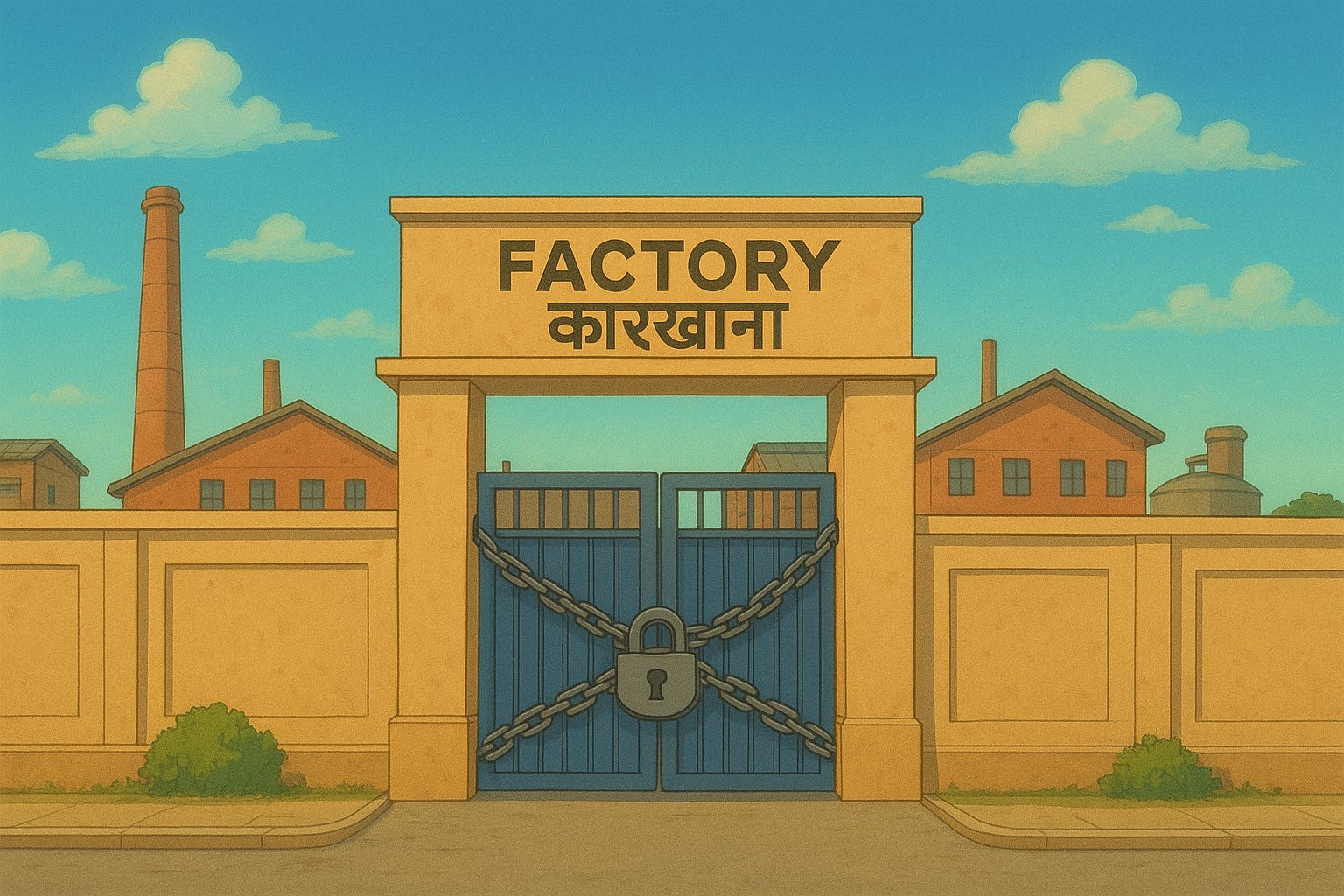
A steel MSME in Maharashtra woke up to find its entire supply chain locked. Overnight, the government enforced a Quality Control Order for steel products with barely a day’s notice. Foreign suppliers couldn’t get Bureau of Indian Standards certification—that process takes six to twelve months. Domestic suppliers didn’t have enough capacity. Contracts got cancelled. Shipments sat at ports. Within weeks, the business shut down.
This wasn’t an isolated case. It’s what happens when regulatory ambition collides with institutional arithmetic. And now a government panel wants to hit reset on 200+ products because the math never worked.
..
Here’s the backstory. Quality Control Orders make product standards legally mandatory. You can’t sell without proving your product meets BIS specifications through testing and certification. No certification, no market access—whether you’re manufacturing in India or abroad.
Until 2016, only 70 products faced these requirements. Then the government decided to stop cheap imports and boost domestic manufacturing. The QCO count exploded from 70 to 790 products in eight years. Door handles. Steel sheets. Industrial transformers. Textiles. Electronics. Everything now needs mandatory BIS approval before entering the Indian market.
The institution tasked with this? BIS has 500 scientists in its inspection cadre. Ten laboratories across the country. That’s 500 people expected to inspect and certify factories globally for 790 different product categories.
The system didn’t slow down. It collapsed.
..
Look at the Machinery and Electrical Equipment Safety Order from 2024. It covers pumps, compressors, cranes, transformers—critical industrial equipment. Only seven laboratories in India can handle testing for these categories. The backlog runs three months just for testing. Add the inspection process—applications are 70-80 pages with 15-16 annexures, documents bounce back and forth for corrections, inspector nominations face delays, visa issues stall foreign audits—and you’re looking at a year-long certification for a single product line.
Foreign manufacturers face inspection fees between $3,800 and $5,400, plus mandatory Indian representatives, performance guarantees, and recurring audits. For companies producing modest volumes for India, the economics don’t work. They exit. Indian importers who relied on them? Options vanish overnight.
But here’s the uncomfortable part. While small players drowned, larger corporations with resources navigated the maze. One stainless steel producer allegedly secured BIS certification for its foreign suppliers just before a QCO kicked in, then raised prices afterward. When compliance becomes a competitive moat, someone’s gaming it while others get crushed.
..
The Gauba panel looked at this breakdown and called it what it is: institutional overreach. Their recommendation is direct—scrap or suspend 27 QCOs covering 200+ products. Focus areas: textiles, plastics, polymers, base metals, footwear, electronics. These are sectors where compliance burdens hit MSMEs hardest and BIS capacity is most stretched.
The panel isn’t saying quality control is bad. They’re saying India’s model doesn’t scale. Only BIS can inspect, only BIS can certify. Global practice allows third-party inspections, mutual recognition agreements with other countries, self-certification for trusted manufacturers. India tried running 790 product categories through a single bottleneck institution that was never sized for this load.
..
The lesson is straightforward. Going from 70 to 790 products in eight years sounds ambitious. But when your inspection workforce stays flat and lab infrastructure doesn’t multiply to match, you don’t get a quality revolution. You get a regulatory traffic jam that strangles the businesses you meant to protect. Sometimes the best policy reform is admitting you overreached before the damage becomes irreversible.
..
Credit: Based on reporting from Swarajya Magazine