

How The IAF Turned A Simple Purchase Into A 20-Year National Embarrassment
Mid-air refuelling isn't rocket science. Getting the planes shouldn't have been either.

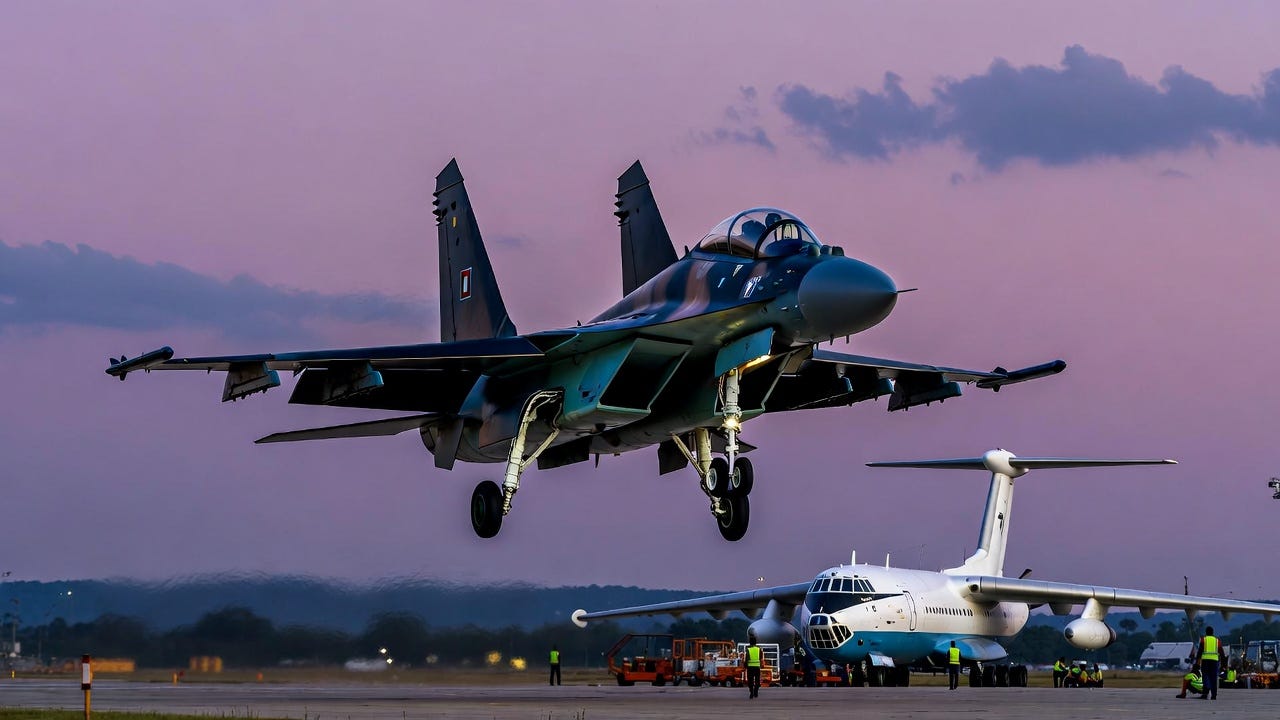
For twenty years, the Indian Air Force chased the perfect aerial tanker and ended up with nothing to show for it.
The Airbus A330 MRTT is, by most accounts, a superb aircraft—high fuel capacity, long range, dual refuelling systems, and a proven track record with NATO allies and Australia. For two decades, it was the aircraft the IAF desperately wanted but could never acquire, not because of technological barriers, but because the service refused to accept that the finance ministry would never approve the price tag.
The pattern became ritualistic: the IAF would float a tender, the A330 would win on technical merit, the finance ministry would object to the cost, and the deal would collapse. Then, after a few years, the IAF would float another tender for the same aircraft, apparently expecting that persistence alone would produce a different outcome.
..
Here’s the thing about aerial refuelling tankers that makes this saga particularly maddening: they aren’t cutting-edge technology requiring decades of development. They’re essentially flying fuel stations, and the global market has multiple proven options at various price points. The challenge was never engineering—it was procurement, and the IAF made an already difficult process considerably harder by refusing to adapt after repeated rejections.
The first tender went out in 2006, and by 2009 the A330 had been shortlisted. By January 2010, the deal was dead after finance ministry objections. A rational response might have been exploring alternatives—different aircraft, used airframes, phased acquisition. Instead, the IAF issued a revised tender and had once again selected the A330 by 2013.
That deal collapsed in July 2016 after the price climbed to $1.5 billion and the defence ministry publicly called the platform “economically unviable.” A third attempt in 2018 also went nowhere—and by then, the operational consequences had become impossible to ignore.
..
The IAF’s existing fleet of six IL-78 MKIs, inducted between 2003 and 2004, had been quietly falling apart for years. A CAG report in 2017 revealed serviceability hovering around 49 per cent, with the fleet crippled by unreliable post-Soviet spare parts. India effectively had three working tankers for an air force expected to project power from Ladakh to the Malacca Strait.
High-value assets like Rafales, Su-30MKIs, and AWACS aircraft all depend on mid-air refuelling to fulfil their strategic potential, and without adequate tanker support, they remained tethered to their bases with artificially constrained range.
By 2025, the IAF resorted to leasing American KC-135s from a private firm, flown by retired US pilots. The arrangement worked for training, but was operationally useless—in any real conflict, those aircraft and crews would simply fly home.
..
The January 2026 decision to acquire six pre-owned Boeing 767s for conversion into tankers marks the end of this saga, and what finally broke the deadlock is worth noting: the IAF gave up on the “best” solution and accepted one that could actually be delivered.
The 767 conversion route, with Israel Aerospace Industries handling the work and HAL involved in local manufacturing, won’t deliver the most impressive platform on the market. But it will deliver tankers that are Western-standard, maintainable, and procurable at prices that don’t trigger ministerial rejection.
This pragmatic approach could have been adopted in 2011, and India would not have spent two decades with a skeletal tanker fleet while its most capable aircraft sat constrained by fuel limitations.
Instead, institutional rigidity transformed a manageable procurement challenge into a chronic operational weakness that the IAF inflicted entirely upon itself.
This article is based on reporting from Swarajya.
Previously it was DALAL MARKET today it is a performing MARKET. It was not a matter of a HIGH PRICE it was matter of LOW BROKERAGE!
Solid breakdown of how organizational inertia turns a procurement issue into a strategic liability. The part about chasing the A330 for two decades while the IL-78 fleet sat at 49% serviceability really captures the cost of perfectionism. I've worked on a few defense logistics projects and the pattern of rejecting workable alternatives because they aren't optimal is depresingly familiar. The 767 conversion might not be the flashiest solution but at least it actualy addresses the operational gap instead of waiting for an ideal that won't clear finance.