

China's Navigation System Was Born From Rage. Now It's Winning
The unforgettable humiliation that rewrote the navigation wars.

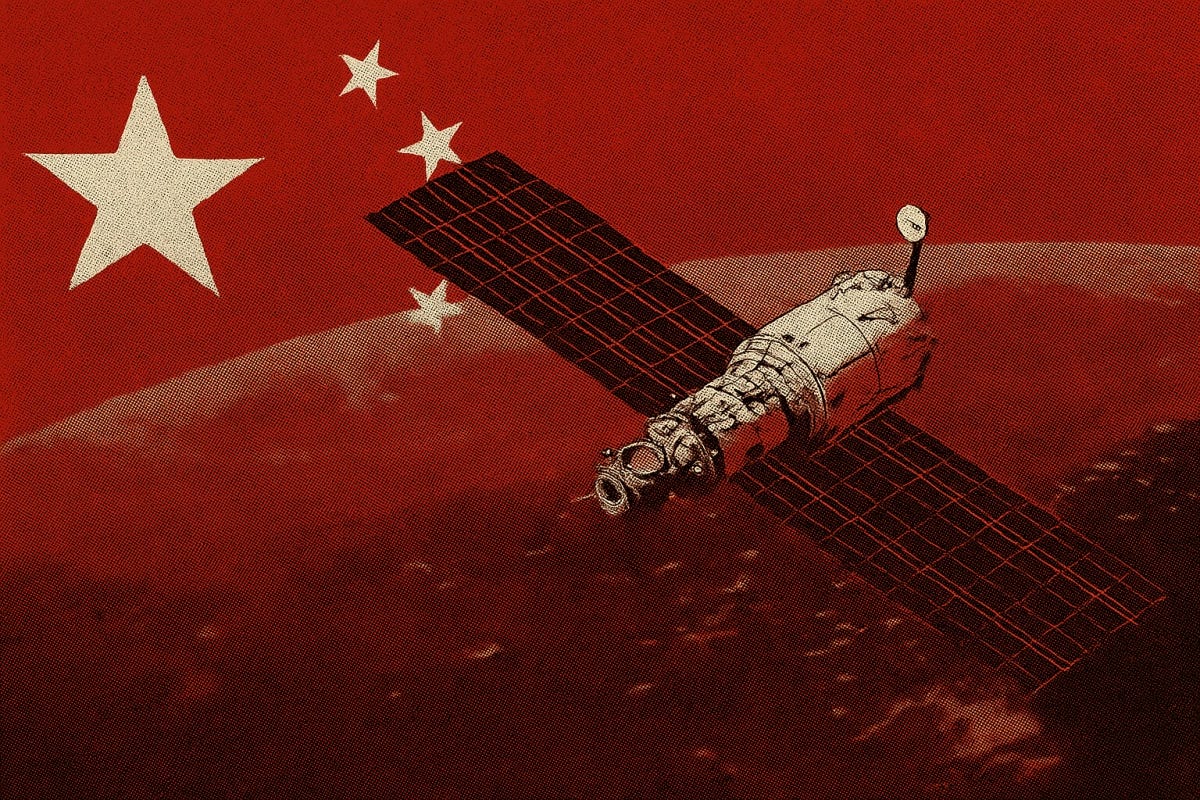
China lost track of two missiles in 1996. America’s been paying for that ever since.
The story: China fired three missiles toward Taiwan as a warning during a exercise. Two disappeared mid-flight. The US had allegedly cut GPS access. Beijing’s military couldn’t track its own weapons. Chinese documents still call it an “unforgettable humiliation.”
Fast forward to 2025. China operates 56 navigation satellites. America has 31.
..
In 165 countries, capital cities see more Chinese satellites than American ones. Your delivery app in Ethiopia? Chinese satellites. Port management in Pakistan? Chinese. That “free” navigation spreading across Africa and Southeast Asia? All Beijing.
The system is BeiDou. It generates $79.9 billion annually and runs on 288 million smartphones. It all traces back to 1996 when China’s missiles went dark.
..
The thing about humiliation is it focuses the mind.
China started building BeiDou in 1994. First satellites launched in 2000. But here’s where it gets interesting—China didn’t just copy GPS. They studied what makes satellite navigation vulnerable and built backups for the backups.
GPS lives entirely in space. Jam the signal, you’re done.
China built three layers: satellites, ground-based eLoran towers, and fiber-linked timing networks. You can knock out one. Knock out two. But all three? That’s a different problem.
..
Think about a Taiwan conflict. China jams GPS across the region. US forces, Japanese ships, allied aircraft—all blind. Chinese missiles keep firing because eLoran towers don’t care about satellite jamming.
The asymmetry is brutal.
Meanwhile, America’s GPS satellites average 13 years old. The oldest has been up there 27 years—since Blockbuster was booming. GPS 3 offers 1-3 meter accuracy. BeiDou does centimeter-level positioning.
The President’s Advisory Board on GPS put it bluntly: “GPS’s capabilities are now substantially inferior to those of China’s BeiDou.”
..
China has 10 times more monitoring stations globally than GPS. Those stations collect data on user locations, movement patterns, infrastructure dependencies. In the Global South where BeiDou provides the most accurate positioning, China has leverage.
Cut off navigation service? That’s economic warfare without firing a shot.
BeiDou’s two-way messaging makes it worse. Unlike GPS, these satellites receive data from users. Search and rescue, sure. But also surveillance. Real-time intelligence from every device.
..
The US is finally waking up. GPS 3F satellites are coming. Proposals for terrestrial backups. Plans for better authentication.
Too late.
China’s embedded in 165 countries. The person in Addis Ababa ordering food has no idea Chinese satellites make it work. They just know it’s better than alternatives.
The long game Beijing’s played since 1996.
..
Thirty years later, China doesn’t just have its own GPS. It has a better one with more satellites, more stations, more features. More countries depend on it than the system it replaced.
The humiliation didn’t weaken China’s resolve. It crystallized it.
And now the US is playing catch-up.